overview
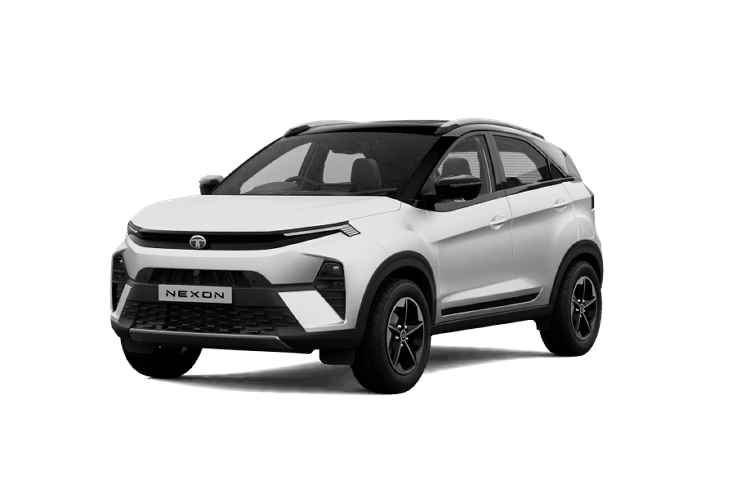
Tata’s own brochure lists close to a dozen Nexon variant names, and if you’ve ever tried to figure out the actual difference between a “Smart+ S” and a “Pure+” while standing at a dealership, you know how quickly that turns into information overload. So instead of just repeating the brochure, I pulled together two very different sources — actual dealership walk arounds of the Creative+ trim, and Tata’s official spec sheet covering the Smart+ S petrol, Smart+ CNG, and Pure+ diesel variants — to build one straight answer: what do you actually get at each price point, and where does Tata draw the line between trims?
Here’s the honest, cross-checked breakdown.
Quick Summary: Where Each Variant Sits
- Smart+ S (1.2 Petrol) — the value entry point, starting under ₹8.5 lakh ex-showroom
- Smart+ CNG (Bi-fuel) — same core trim, CNG-equipped, roughly ₹80,000 more than the petrol
- Pure+ (1.5 Diesel) — a notch higher on both trim and power, with pricing that pushes past the ₹10 lakh ex-showroom mark
- Creative+ / Creative+ PS — the mid-to-upper trim (covered in detail in our companion walkaround review) that adds the panoramic sunroof, larger touchscreen, and 360-degree camera
The interesting part is how much Tata keeps standard even at the base Smart+ level — and how much genuinely changes once you cross into Creative+ territory. Let’s go feature by feature.
Pricing and EMI: The Real Gap Between Trims
Straight from Tata Nexon official price list (ex-showroom, all subject to change and best confirmed with your local dealer):
| Variant | Ex-Showroom Price | Estimated EMI (60 months @ 9%) |
| Smart+ S (1.2 Petrol) | From ₹8,44,990 | ₹17,541/month |
| Smart+ CNG (Bi-fuel) | From ₹9,24,990 | ₹19,201/month |
| Pure+ (1.5 Diesel) | From ₹10,09,990 | ₹20,966/month |
A few things worth flagging here that the brochure won’t spell out:
- The jump from Smart+ S petrol to Smart+ CNG is only around ₹80,000 ex-showroom, which is a genuinely quick payback period if your monthly running is high — CNG running costs are roughly 40–45% lower per kilometre than petrol.
- The jump from Smart+ CNG to Pure+ Diesel is around ₹85,000, and here you’re not just paying for the diesel engine — you’re also paying for a meaningfully larger touchscreen, more speakers, and premium ORVM finishing, which we’ll get to below.
- These are ex-showroom figures. Based on the real dealership quotes we cross-referenced separately, on-road prices in most states run ₹1.3–2 lakh higher once you add RTO tax, insurance, and handling charges — so budget accordingly rather than anchoring on the ex-showroom number alone.
Engine and Performance: Three Very Different Characters
This is where the spec sheet really earns its keep — the “1.2L Turbocharged Revotron” badge actually covers two distinctly different states of tune depending on which fuel it’s running.
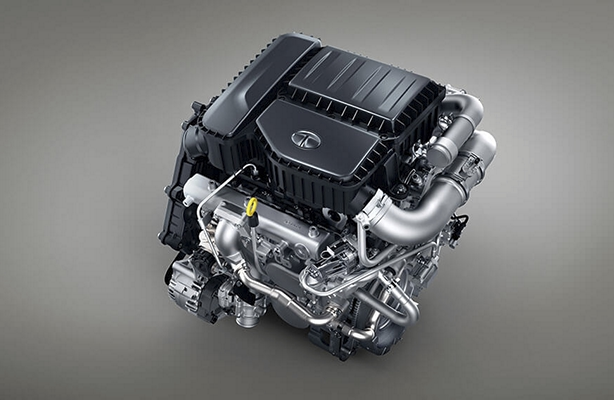
Smart+ S — 1.2L Turbo Petrol – 120 PS @ 5500 rpm, 170 Nm @ 1750–4000 rpm – 1199cc, paired with a 5-speed manual gearbox – This is actually the punchiest of the three in outright power figures — the petrol engine is tuned for peppier response, which tracks with what we found in the real-world walkaround: the petrol variant genuinely feels livelier to drive than the CNG version.
Smart+ CNG — 1.2L Turbo, Bi-fuel – 100 PS @ 5000 rpm, 170 Nm @ 2000–3000 rpm (same torque figure as petrol, just delivered later in the rev range) – 1200cc, but paired with a 6-speed manual — one extra gear over the pure petrol, likely to help offset the power loss on CNG – This confirms what dealership staff told us in person: yes, there’s a real power drop on CNG (roughly 17% down on peak power), and yes, you lose features like cruise control on the CNG variant that the petrol keeps.
Pure+ — 1.5L Turbo Diesel (Revotorq) – 116 PS @ 4000 rpm, and a substantially higher 260 Nm @ 1500–2750 rpm – 1496cc, 6-speed manual – The torque figure is the real story here — 260 Nm at low revs makes this the variant to pick if you’re doing frequent highway runs or regularly carry a full car of passengers plus luggage. It won’t rev as eagerly as the petrol, but it pulls harder from a standstill.
All three share identical body dimensions (3995mm length, 1804mm width, 1620mm height), the same 2498mm wheelbase, and the same 208mm ground clearance — so whichever engine you pick, the SUV underneath doesn’t change.
Fuel Tank and Real-World CNG Range: Cross-Checking Brochure vs. Reality
One detail worth calling out because it’s easy to get wrong: Tata’s official spec sheet lists the CNG variant’s tank capacity as 44 litres petrol plus 60 litres CNG (water capacity). When we inspected a higher Creative+ PS CNG unit in person, the dealer pointed to twin 30-litre-rated cylinders — combined, they match that 60-litre number exactly.. So the brochure number and the physical hardware genuinely match, which isn’t always a given with automaker spec sheets.
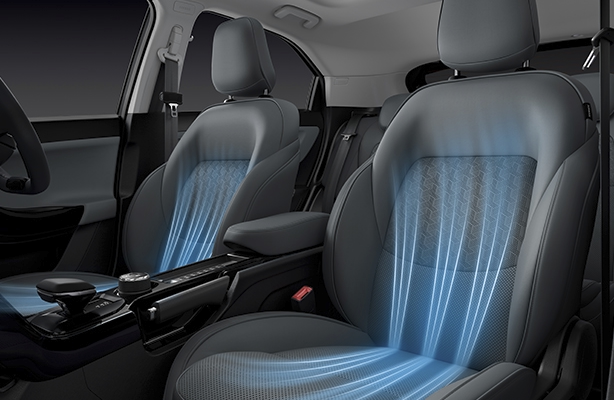
What the brochure doesn’t tell you, though, is the boot space hit. Officially, Tata lists CNG boot space at 321 litres versus 382 litres on the petrol and diesel variants. But that 321-litre figure is a best-case number — in practice, once the twin cylinders and their housing are accounted for, usable boot space in day-to-day use felt closer to 200–250 litres in the unit we inspected.If a full-sized boot matters to you, weigh this practical gap instead of relying purely on the official spec number.
Exterior: What Actually Changes as You Go Up the Range
Looking across Smart+ S, Smart+ CNG, and Pure+, quite a bit stays unchanged — more than you’d expect:
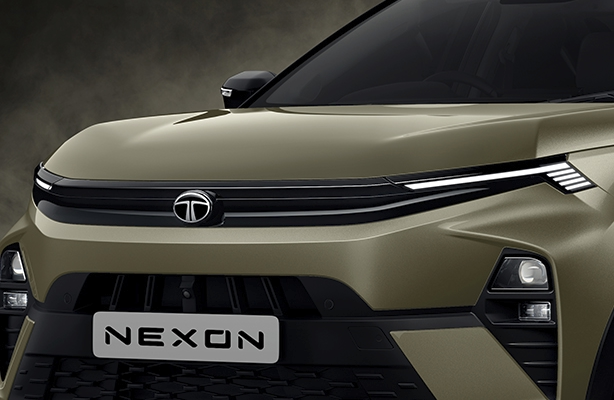
- LED headlamps, LED DRLs, and the tri-arrow signature LED tail lamp are standard across all three — this isn’t locked to higher trims, which is a genuinely good sign for anyone worried the base variant will look cheap
- Body-coloured bumpers and an integrated rear spoiler come standard too
- High-gloss black front grille is shared across the range
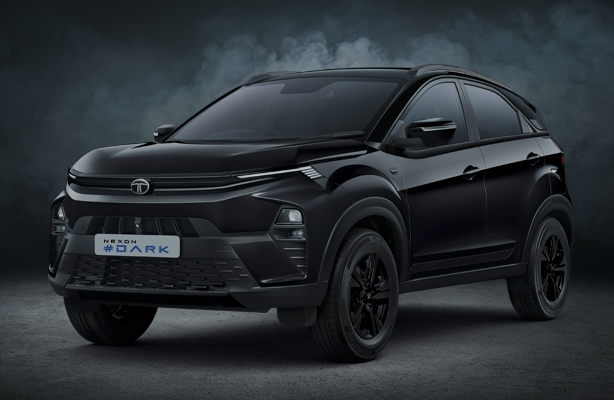
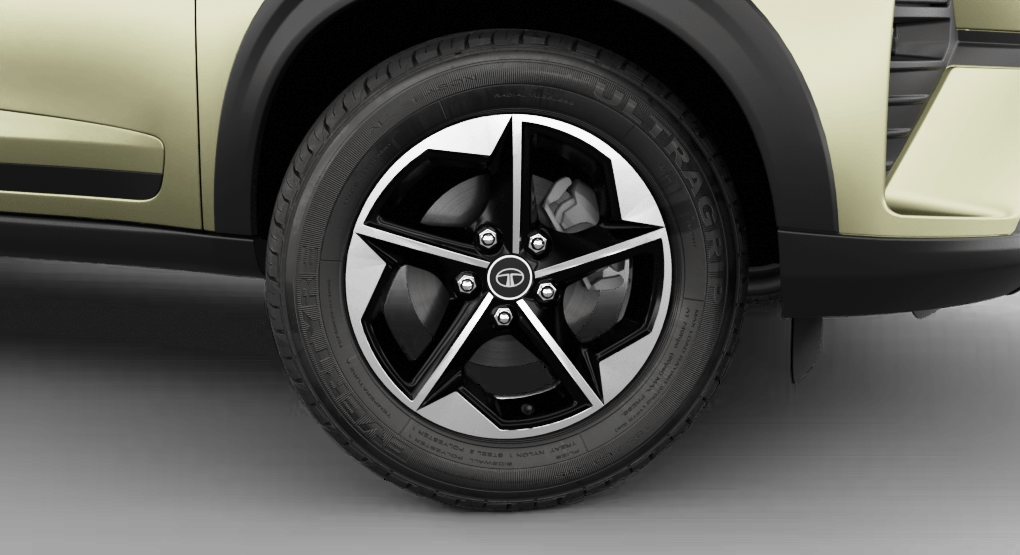
The differences are subtler than you’d expect: – Antenna: Pure+ gets a shark-fin antenna, while both Smart+ variants make do with a conventional rod-type antenna – ORVM finish: Pure+ gets piano black mirror caps, versus granite black on the Smart+ twins – Wheels: all three variants here run on 16-inch steel wheels with wheel covers — the diamond-cut alloys we saw in the Creative+ walkaround are reserved for that higher trim, not standard even on the diesel Pure+
Tyre sizing is where the diesel variant pulls ahead meaningfully: 215/60 R16 on the Pure+ versus 195/60 R16 on both Smart+ variants — a wider, more planted contact patch that should translate to marginally better high-speed stability.
Interior and Comfort: More Common Ground Than You’d Think
This is genuinely one of the more consumer-friendly things about the current Nexon lineup — Tata doesn’t gatekeep basic comfort and safety features behind the top trim.
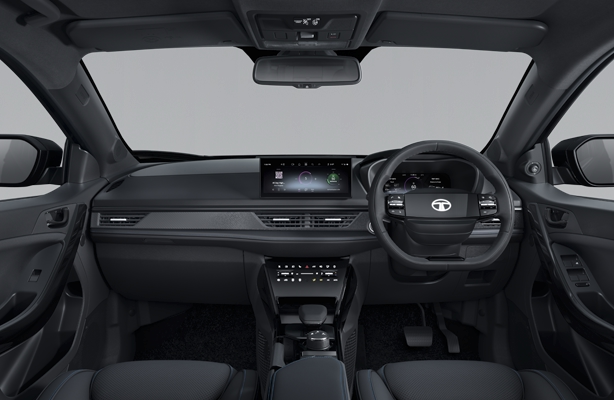
Common to all three — Smart+ S, Smart+ CNG, and Pure+: – 4-way driver seat adjustability – Steering that tilts but doesn’t telescope (a gap worth noting across the board) – Manually operated HVAC — no automatic climate control until you move up to Creative+ and beyond – Power windows on all four doors – Central locking with remote and switch – A fully digital 10.16 cm instrument cluster — Tata doesn’t reserve the digital cluster for premium trims, which is unusual in this segment – Steering-mounted audio and phone controls – Vanity mirror on the co-driver’s sun visor
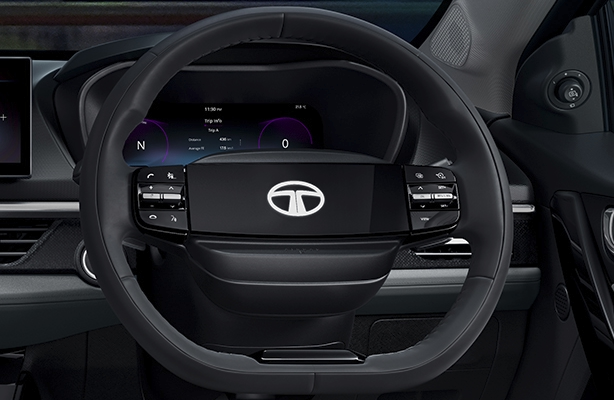
Where it differs is subtle — the “Persona based interior theme” customization option shows up explicitly on Pure+ and Smart+ S in Tata’s own comparison sheet, but doesn’t call out separately for the Smart+ CNG variant — a sign that buyers of this trim may have fewer finish/theme choices available to the. Worth confirming with your dealer if interior colour options matter to you.
Infotainment: The Single Biggest Trim Differentiator
If there’s one feature genuinely worth paying to upgrade for, it’s this. The infotainment gap between Pure+ and the two Smart+ variants is the largest functional difference in the entire comparison:
- Pure+ (Diesel): 26.03 cm (roughly 10.25-inch) Harman touchscreen with 4 speakers
- Smart+ S and Smart+ CNG: 17.78 cm (roughly 7-inch) floating touchscreen, also by Harman, but with only 2 speakers
Wireless Apple CarPlay and Android Auto, FM/AM, Bluetooth, and USB connectivity are common across all three — the gap is purely about screen real estate and audio hardware. If infotainment and audio quality matter to you day-to-day, this alone might justify skipping straight to Pure+ rather than starting with a Smart+ variant and upgrading later (which, on the Nexon, generally isn’t possible — features here are trim-locked, not optional add-ons).
Safety: The Nexon’s Strongest, Most Consistent Selling Point
This is worth repeating because it’s genuinely rare in this price bracket: 6 airbags come standard on all three variants, from the base Smart+ S all the way up. So do:
- ABS with EBD
- Electronic traction control
- Day & Night manual IRVM
- Reverse park assist with ultrasonic sensors
- ISOFIX child seat mounts
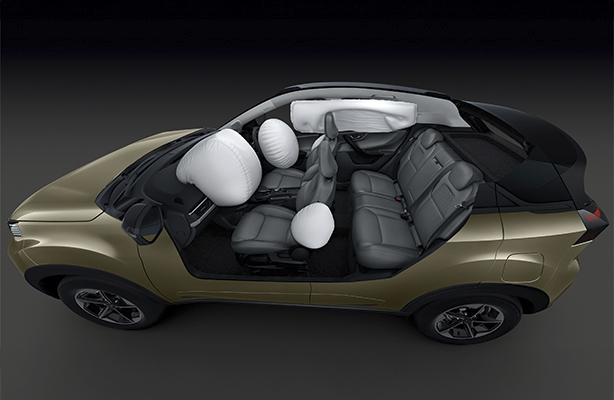
None of this is held back for a “top” trim, which reinforces something we noted in the Creative+ walkaround too — Tata’s safety package doesn’t get diluted as you move down the price ladder, and that’s a genuinely strong argument for the Nexon over rivals that reserve airbags 3 through 6 for their priciest variants.
Pros and Cons Across the Lineup
What’s consistently good: – 6 airbags and core safety kit standard on every variant, not just the top trim – LED lighting (headlamps, DRLs, tail lamps) standard across the range – Digital instrument cluster included even on the base Smart+ S – Genuine engine variety — petrol, CNG, and diesel all built on the same platform
Where Tata cuts corners lower down: – Manual AC only until you move well up the range – Small 7-inch touchscreen and just 2 speakers on both Smart+ variants – No telescopic steering adjustment on any of the three variants covered here – CNG variant loses meaningful boot space and drops peak power by roughly 17%
Which Variant Should You Actually Buy?
- Tight budget, mostly city driving: Smart+ S petrol is the sensible pick — you’re not missing any safety kit, just infotainment polish
- High monthly running (daily commute, ride-hailing, frequent long drives): Smart+ CNG pays for its ₹80,000 premium quickly through fuel savings, as long as you can live without cruise control and reduced boot space
- Highway-heavy driving, frequent full-load trips: Pure+ diesel’s low-end torque and larger touchscreen make it the most complete package, if your budget stretches past ₹10 lakh ex-showroom
- Want the sunroof, larger camera system, and the most premium cabin feel: that’s the Creative+ territory — worth reading our detailed walkaround-based review of that trim for the full picture
- if you wanna go with higher version of TATA then TATA Sierra is best chioice for yiun as well.
Final Word
What stood out most cross-referencing dealership walkarounds against Tata’s own spec sheet is how little the safety package changes as you move down the price ladder, and how much the infotainment experience changes instead. If you’re budget-conscious, you’re not sacrificing crash protection by picking the base Smart+ S — you’re sacrificing screen size and audio quality. Know which trade-off actually matters to you before you decide, rather than assuming “higher variant = safer car,” because on the Nexon, that specific assumption doesn’t hold.
Prices and EMI estimates are based on Tata Motors’ official ex-showroom price list and are subject to change at the manufacturer’s discretion. Always confirm current on-road pricing, applicable discounts, and exact variant availability with your nearest Tata Motors dealership before making a purchase decision.