Everything you need to know before spending ₹3+ lakhs on India’s most talked-about performance street bike.
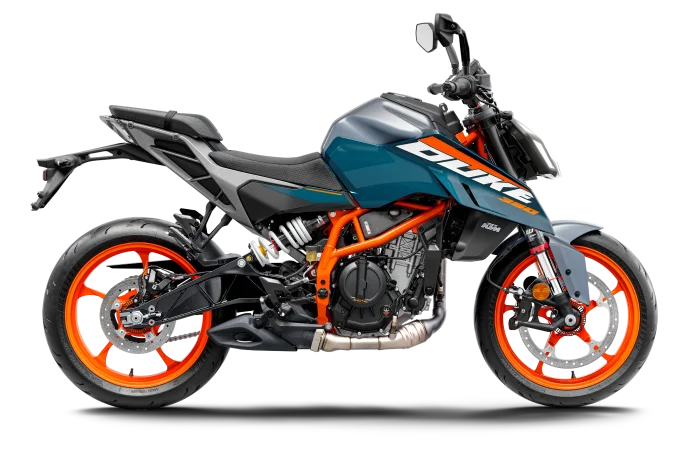
I’ve been through all three bikes in detail — specs, real-world ride feel, features, flaws, and everything in between. This is not a sponsored piece. This is not a sales pitch. This is the most honest, complete breakdown of the KTM Duke 390 ecosystem you’ll find — including who should buy it, who shouldn’t, and which alternative actually makes more sense for your lifestyle.
Why the Duke 390 Is Still the One Everyone Talks About
In a country where 150cc bikes dominate sales charts, the KTM Duke 390 exists in its own universe. It’s the bike that made an entire generation of Indian riders believe that performance motorcycling doesn’t have to cost superbike money.
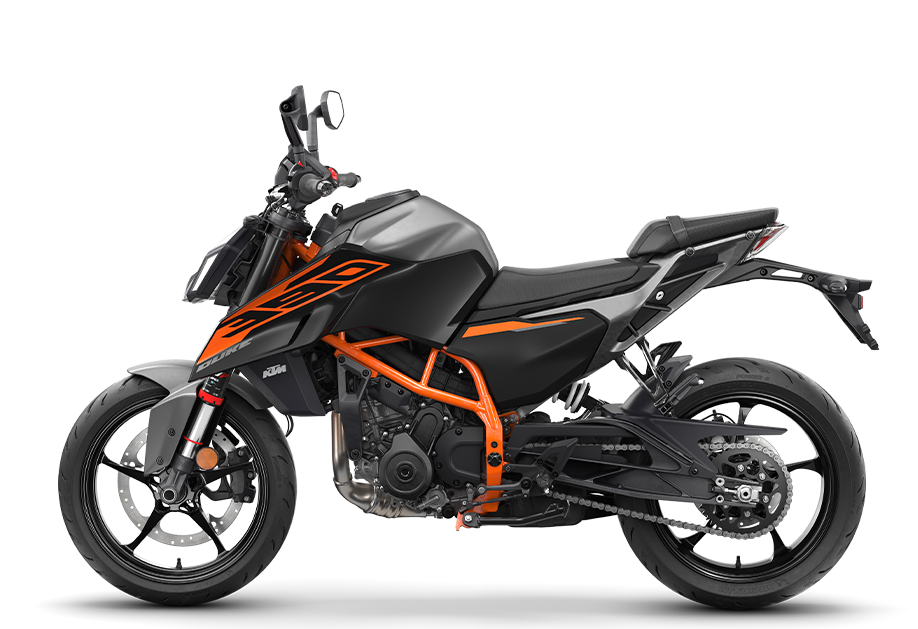
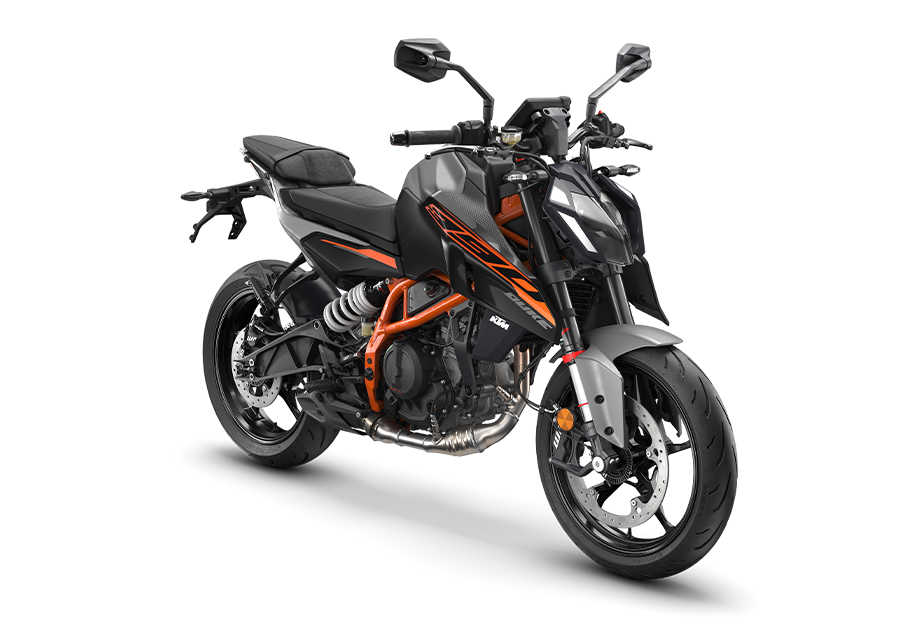
The 2025-26 model continues that legacy — but now with meaningful updates. KTM bumped the engine from 373cc to 398cc, added cruise control, refreshed the colour palette with a stunning gunmetal grey and an eye-catching orange option, and kept the price surprisingly stable at ₹2.95–2.99 lakh ex-showroom depending on your city.
For context — that’s a bike with launch control, cornering ABS, traction control, a 5-inch TFT display, and a quickshifter. At under ₹3 lakh ex-showroom. Let that sink in.
The Engine — Raw, Rewarding, and a Little Demanding
The heart of the Duke 390 is a 398.6cc single-cylinder liquid-cooled LC4C engine producing 46 PS of power and 39 Nm of torque. These aren’t just numbers on a spec sheet — this engine has a genuine personality, and not everyone will love it equally.
Below 5,000 RPM, the engine is manageable — even a little tame. But cross that 7,000 RPM mark and the bike transforms entirely. The throttle response sharpens, the acceleration becomes genuinely violent, and you’ll find yourself grinning underneath your helmet while slightly terrified. That’s the Duke 390 experience in a sentence.
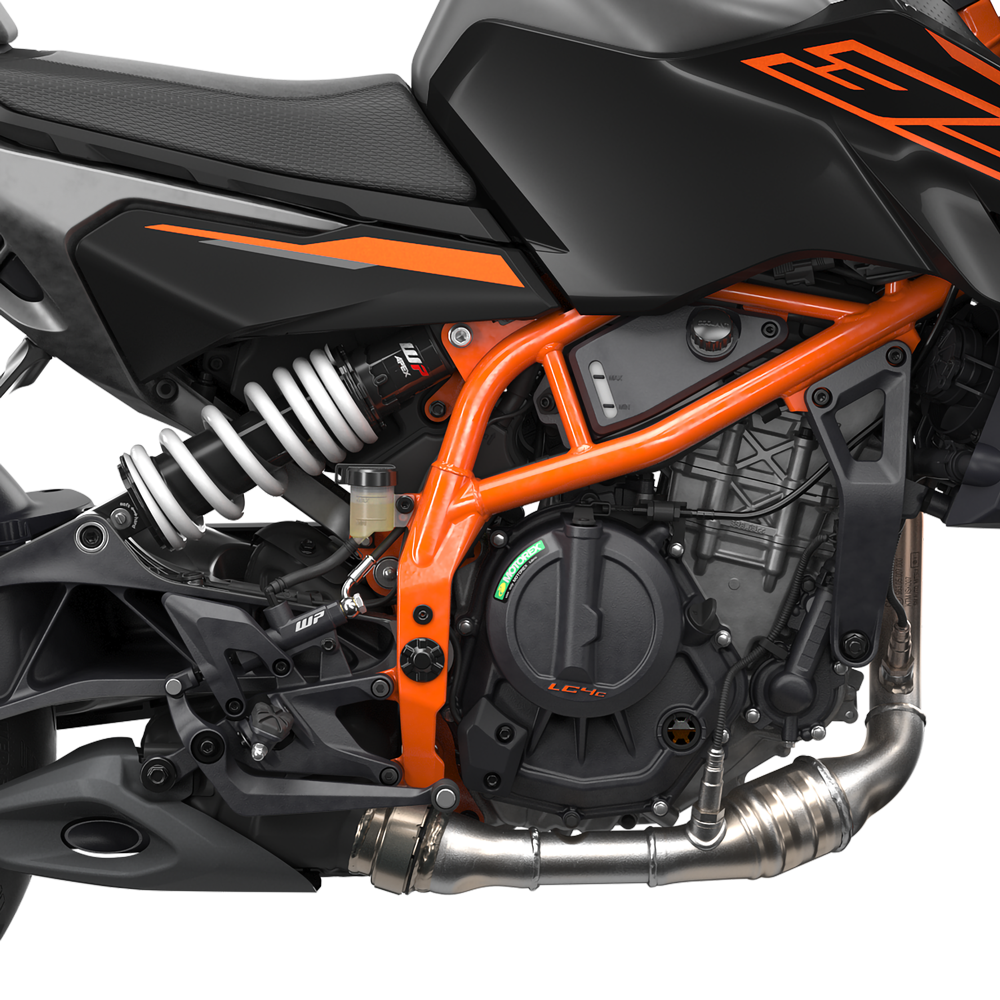
The 399cc motor is a significant improvement over the older 373cc unit. Vibrations have reduced noticeably, though they haven’t disappeared — and they never will from a high-compression single this powerful. At 5,000–6,000 RPM and above, vibrations creep into the footpegs and tank. During engine braking, they’re particularly noticeable. This is not a flaw — it’s the nature of the beast. If you’re buying a Duke 390, make peace with this before you walk into a showroom.
City riding reality check: In stop-and-go traffic, the Duke 390 demands constant gear changes. It doesn’t crawl happily in third gear like a low-end torque monster would. Low-RPM torque availability is slightly limited, which means you’ll need to keep the bike in lower gears in heavy traffic — and that directly impacts fuel efficiency too. The estimated real-world mileage sits between 20–25 kmpl city and 28–30 kmpl highway, depending heavily on how you ride.
For young riders who don’t mind working through gears in traffic — this isn’t a problem. For those who prefer a more relaxed, effortless city experience, it can get tiring over time.
Top speed sits comfortably around 165–170 kmph, and overtaking performance on highways is nothing short of spectacular.
Features That Make the Duke 390 Feel Like a Superbike
This is where the Duke 390 genuinely earns its reputation. The feature list at this price point is almost unfair to its competitors.
The 5-inch TFT display is sharp, readable, and packed with functionality. You get:
- Three different riding modes — Street, Track, and Rain
- Motorcycle Traction Control (MTC) — fully adjustable on/off
- Launch Control — engages in Track mode, limits wheelspin off the line
- Cornering ABS — thanks to the IMU unit that reads lean angle in real time
- Cruise Control and Speed Control — the biggest new addition, making the 390 genuinely touring-friendly
- Supermoto ABS — lets you cut rear ABS for track-style riding
- Quickshifter Plus — bidirectional, clutchless upshifts and downshifts
- Bluetooth Connectivity — turn-by-turn navigation with call and SMS alerts its part of technology
- Lap Timer — yes, a lap timer, on a street bike under ₹3 lakh
The addition of cruise control is particularly significant. It transforms the Duke 390 from a pure performance toy into a machine that can genuinely handle long highway rides without exhausting your right wrist.
One honest note on the quickshifter: it works, but it’s not buttery smooth. There’s a slight jerkiness to gear engagement, particularly on upshifts. KTM has had this system for years and it still hasn’t been fully polished. It’s bearable — but for a bike this refined in other areas, it stands out as something the brand should address.
Suspension, Brakes, and Handling — Where the Duke 390 Shines
The suspension setup on the Duke 390 is genuinely impressive — especially the front end.
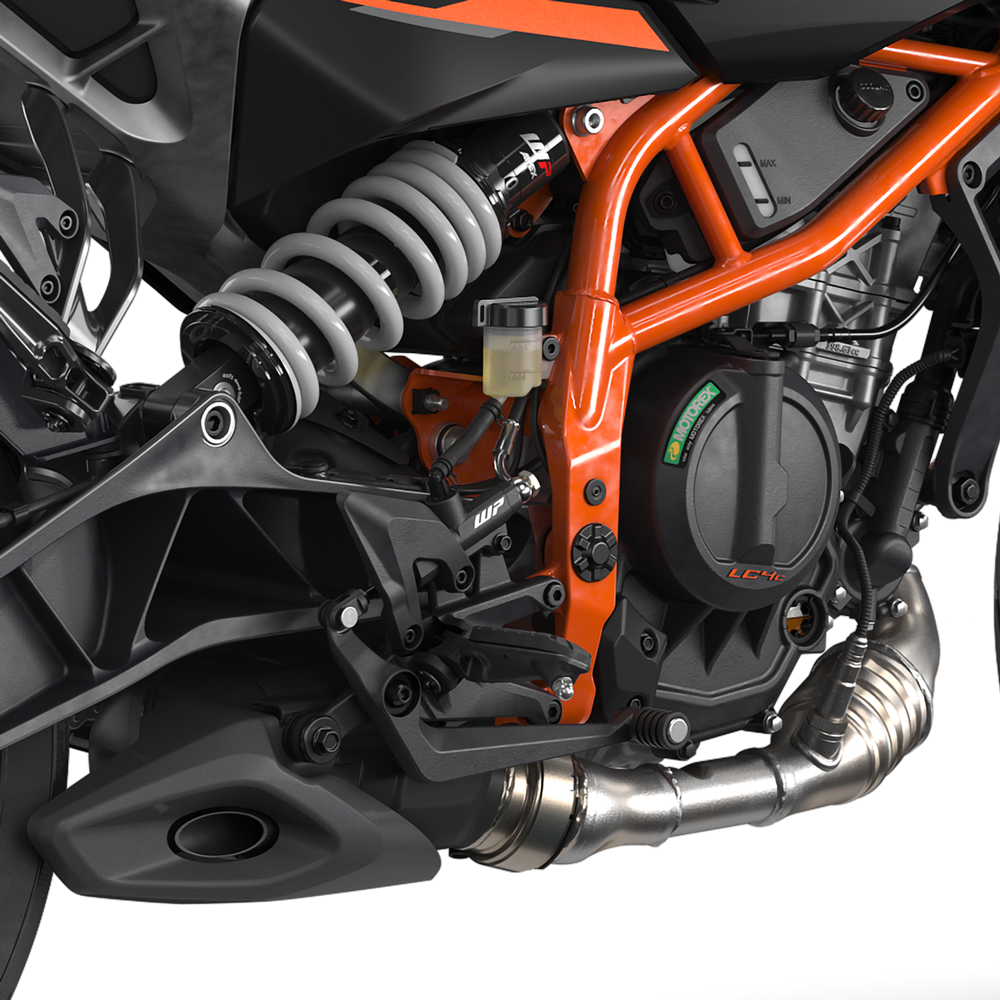
Front: WP Apex 43mm upside-down forks with 5-click compression and rebound damping adjustment. 150mm travel. You can tune the front end for city roads, highways, or track days — a flexibility that bikes costing twice as much often don’t offer.
Rear: WP Apex monoshock with 10-step preload and 5-step rebound damping adjustment. Offset positioning on the right side — which creates space for a larger airbox, improving breathing and performance.
The suspension is firm by nature. This is a sports-oriented setup, and it shows. Small potholes get absorbed reasonably well, but larger bumps will definitely reach you. For city commuting on rough roads, it can feel punishing. On smooth highways and twisty ghats, it’s absolutely in its element.
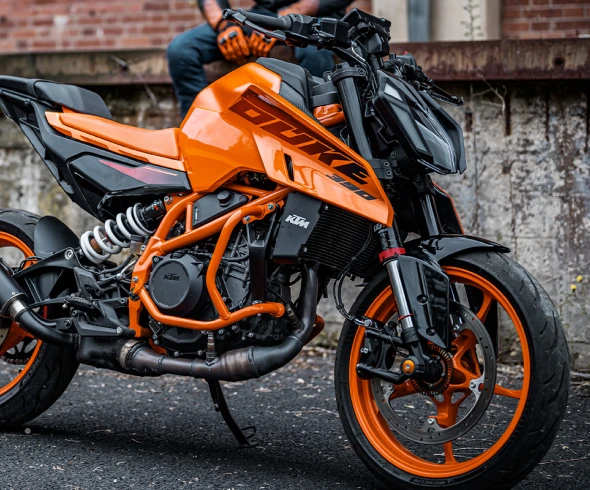
Braking is one of the Duke 390’s strongest suits. The 320mm hubless front disc with Bybré radially-mounted 4-piston calipers and sintered brake pads delivers sharp, progressive stopping power that inspires total confidence. Front brakes alone can handle 90% of your stopping needs. The rear 240mm disc with single-piston caliper is adequate but plays a secondary role — which is fine on a bike with this weight distribution.
Handling is where the Duke 390 feels most alive. The narrow tank makes it easy to flat-foot even for shorter riders (5’5″ and above will manage comfortably), and the wide handlebar gives excellent leverage for flicking through traffic and corners. Stability at high speeds is surprisingly good for a naked bike — the front end stays composed even under hard throttle. Turning radius is short, making urban navigation easier than you’d expect.
Higher Build Quality
KTM has improved build quality significantly over the years. Panel gaps are tight, plastic quality is premium — it doesn’t rattle or vibrate — and the overall fit and finish feels genuinely well-engineered rather than budget-compromised.
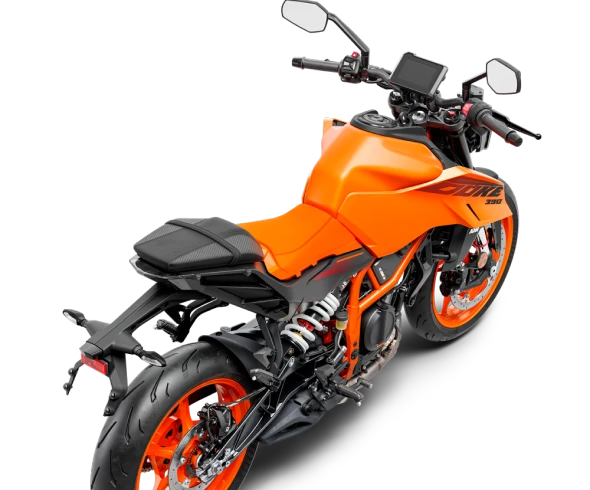
Notable details include:
- Metal fuel tank (15-litre capacity) with fibreglass side shrouds
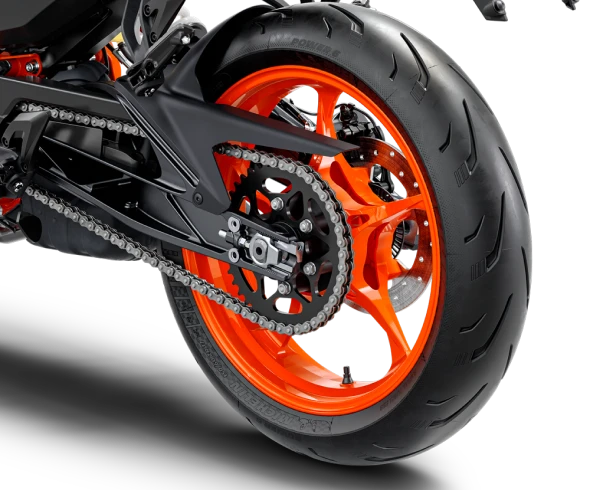
- Aluminium swingarm for a more agile, responsive feel
- X-ring chain — better lubrication retention than standard O-ring chains, meaning longer service intervals
- Split seat setup — medium cushioning with anti-slip pattern for both rider and pillion
- All-LED lighting — headlight, DRLs, indicators, tail light
- Type-C charging port — hidden but genuinely useful
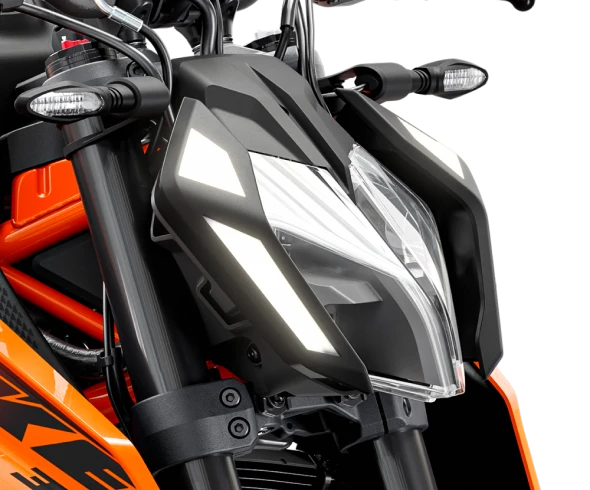
The gunmetal grey and orange colour options for 2026 are both excellent. The orange particularly stands out — the matte-gloss combination with the carbon-fibre-textured Duke branding looks stunning in person.
KTM Duke 390 vs KTM Duke 250 — Should You Save ₹1.1 Lakh?
This is one of the most common dilemmas for Indian buyers, and it’s a genuinely interesting one because the Duke 250 is no joke.
| Feature | Duke 250 | Duke 390 |
| Engine | 250cc, liquid-cooled | 399cc, liquid-cooled |
| Power | 31 PS | 46 PS |
| Torque | 25 Nm | 39 Nm |
| On-Road Price (Pune) | ~₹2.55 lakh | ~₹3.66 lakh |
| Riding Modes | 2 (Street, Track) | 3 (Street, Track, Rain) |
| Traction Control | ❌ | ✅ |
| Cruise Control | ❌ | ✅ |
| Launch Control | ❌ | ✅ |
| Cornering ABS (IMU) | ❌ | ✅ |
| Front Suspension | Non-adjustable USD | Fully adjustable USD |
| Tyres | MRF Steel Brz | Apollo Alpha H1 |
| City Mileage | 25–26 kmpl | 20–22 kmpl |
Visually, the two bikes are remarkably similar — same headlight design, same tail section, same offset monoshock setup, same seat height of 800mm. Ride side by side and a non-enthusiast might not spot the difference.
But ride them back to back and the gap becomes very clear.
The Duke 390’s engine has a completely different character — more urgency, more drama, more involvement. The additional features like traction control, launch control, cornering ABS, and cruise control aren’t gimmicks — they genuinely improve the riding experience in different conditions.
However — and this is important — the Duke 250 gives you roughly 70–80% of the Duke 390 experience at significantly lower cost. If your budget genuinely caps at ₹2.5 lakh on-road and you don’t want to stretch with EMI, the Duke 250 is not a compromise. It’s a brilliant bike in its own right. Think of it as a Mini Duke 390 — sharper than most bikes in its segment, loaded with personality, and surprisingly capable.
The ₹1.1 lakh premium for the 390 buys you meaningfully more power, rain mode, traction control, cornering ABS, cruise control, and launch control. If you can afford it – just buy it don’t think to much. If you can’t — the 250 won’t leave you feeling shortchanged.
KTM Duke 390 vs Triumph Speed 400 — difficult to choose
This comparison is where things get genuinely interesting — because the Triumph Speed 400 doesn’t compete on the same terms. It offers a completely different riding philosophy.
| Feature | Duke 390 | Triumph Speed 400 |
| Engine | 399cc, 46 PS, 39 Nm | 398cc, 40 PS, 37.5 Nm |
| On-Road Price (Pune) | ~₹3.66 lakh | ~₹2.85 lakh |
| Design Language | Street Fighter / Aggressive | Classic Roadster |
| Seat Height | 820mm | 830mm |
| Kerb Weight | 168 kg | 179 kg |
| Ground Clearance | 183mm | 165mm |
| Fuel Tank | 15 litres | 13 litres |
| Seat Comfort | Medium-firm | Plush and wide |
| Front Suspension | Adjustable USD | Non-adjustable USD |
| Suspension Travel (F/R) | 150/150mm | 140/120mm |
| Front Disc | 320mm | 300mm |
| Rear Disc | 240mm | 230mm |
| Tyres | Apollo Alpha H1 | Bridgestone Battlax |
| Cruise Control | ✅ | ❌ |
| Launch Control | ✅ | ❌ |
| Cornering ABS | ✅ | ❌ |
| Quickshifter | ✅ (bidirectional) | ❌ |
| TFT Display | ✅ (5-inch) | Basic digital |
| Engine Immobiliser | ❌ | ✅ |
| City Mileage | 20–22 kmpl | 21–23 kmpl |
| Highway Mileage | 28–30 kmpl | 30–33 kmpl |
The Speed 400 costs approximately ₹50,000–55,000 less on-road and offers something the Duke 390 genuinely can’t match — comfort and low-end torque.
The Speed 400’s seat is wider, softer, and more accommodating for both rider and pillion. Its suspension, while less adjustable, is tuned for comfort — absorbing bad roads more gracefully. Its upright, relaxed riding posture makes it a natural choice for daily commuting and long-distance touring. And its low-end torque delivery means you can cruise in a higher gear without constantly downshifting in traffic — something the Duke 390 genuinely struggles with.
On the other hand, the Duke 390 is the clear winner on outright performance, features, ground clearance (183mm vs 165mm — a significant real-world difference on Indian roads), suspension travel, and the sheer thrill of the riding experience.
The Triumph’s service network remains thinner than KTM’s, which is a real-world consideration if you live outside a major city.
My honest take: The Speed 400 is the better everyday motorcycle. The Duke 390 is the better performance machine. If you commute daily, carry a pillion regularly, and occasionally want to enjoy weekend rides, the Speed 400’s character suits you better. If you live for the weekend blast, the track day, the ghat section run — the Duke 390 is the one you’ll never get bored of. in the same segment if you want to go scrambler 400 is also choice for riders.
Who Should Buy the Duke 390?
Buy the KTM Duke 390 if:
- You want the best performance per rupee under ₹3 lakh — nothing else matches it
- You enjoy an involving, engaging ride where you’re always connected to what the bike is doing
- You do highway and ghat riding regularly and want cruise control, cornering ABS, and launch control
- You’re an experienced rider comfortable managing a high-compression single in traffic
- Features matter to you — traction control, multiple ride modes, TFT display with navigation
- You want a head-turner — few bikes at this price command as much attention on the road
Don’t buy the Duke 390 if:
- You’re primarily a city commuter who wants effortless, relaxed riding every day
- Pillion comfort is a priority — the firm seat and aggressive nature make this a tough bike to two-up regularly
- You’re a newer rider not yet comfortable managing a powerful, peaky single in varied conditions
- Rough roads are your daily reality — the stiff suspension setup will wear you out quickly
Final Verdict
The KTM Duke 390 in its 2026 avatar is the best it has ever been or ever created before because its sport and monster look. The larger engine, reduced vibrations, cruise control addition, and sharper feature set make a compelling package that no other Indian manufacturer has come close to matching at this price point.
It’s not a perfect bike. The quick shifter still needs refinement. City ridability demands patience. Vibrations at high RPM are part of the deal. Pillion comfort is average at best.
But when you take this bike on an open highway, or thread it through a series of corners on a ghat road, or feel that engine wake up above 7,000 RPM — every single compromise instantly makes sense.
The Duke 390 isn’t trying to be everything to everyone. It’s trying to be the most exciting thing in your life at ₹3 lakh. And honestly? It succeeds.
Which bike are you considering — the Duke 390, Duke 250, or Triumph Speed 400? Drop your thoughts in the comments. And if this comparison helped you clear your doubts, share it with someone who’s stuck in the same dilemma.